In this article
The Person Nobody Sees
There is a version of me that almost nobody knows.
Not because I'm hiding some huge secret, but because I simply behave differently when I'm alone. I think differently, speak differently, and sometimes even want completely different things. When nobody is around, there is no need to explain myself or worry about how I'm being perceived. I can just exist.
That makes me wonder sometimes: Is that the real me?
It's an interesting question because the person I am around other people doesn't always look exactly like the person I am by myself. Around friends, I might be louder, more confident, or more willing to joke about things. Around family, I'm probably different again. Around strangers, I become quieter and more aware of everything I say.
None of these versions feel completely fake.
And that's what makes the question complicated.
I've always imagined personality as something solid, almost like a permanent object inside us. We say things like, "That's just who I am," as if there is one fixed personality underneath everything else. But if that's true, why does that personality seem to change depending on where we are?
Maybe we're not changing as much as we think.
Maybe different situations simply bring out different parts of us.
Think about how differently someone can behave with their closest friend compared to a teacher or a complete stranger. They haven't suddenly become a different person. They're still the same individual, carrying the same memories and experiences. Yet something shifts. Their voice changes, their expressions change, even the things they feel comfortable talking about can change.
It's almost like different people have access to different rooms inside us.
Some rooms are open to everyone.
Some are only open to people we trust.
And some might remain locked even to ourselves.
I think that's what makes understanding another person so difficult. We only ever meet a small part of them. We see the version they bring into our particular relationship, but we don't get access to every thought they've ever had or every side of their personality.
And they don't get access to ours either.
Sometimes I wonder if that means everyone around us has a slightly different idea of who we are. A friend might describe us one way. A family member might describe us completely differently. A teacher might have another impression altogether. None of them are necessarily wrong.
They're just seeing different versions.
Maybe that's why trying to find our "true self" can become so confusing. What if there isn't a single version hidden somewhere underneath everything? What if we're made from all these different reactions, memories, relationships, and experiences?
The quiet version.
The funny version.
The serious version.
The nervous version.
The confident version.
The version that only appears around someone we completely trust.
Maybe all of them are real.
I don't think that means we should become whatever other people want us to be. There is a difference between adapting naturally and completely losing ourselves to fit in. But perhaps identity has always been more flexible than we like to admit.
Maybe the person nobody sees isn't necessarily the "real" me.
Maybe they're simply one part of me that appears when the world becomes quiet enough for me to notice it.
And perhaps the same is true for everyone else.
We spend so much time wondering who people really are, when maybe there is no single answer. Maybe every person we meet is only showing us one small piece of a much larger self.
And honestly, I think that's a little comforting.
It means I don't have to find one perfect version of myself.
I can simply keep discovering the different ones.
The Masks We Don't Notice Wearing

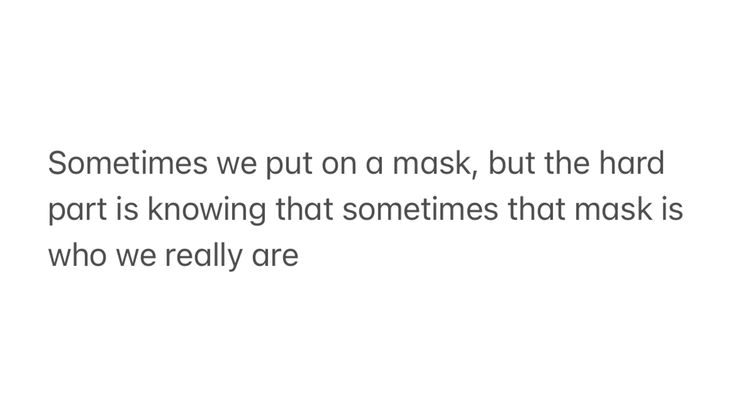
I used to think wearing a mask meant pretending to be someone you're not. It sounded negative, like hiding your personality because you were afraid people wouldn't accept the real you. But the more I think about it, the more I wonder if that's too simple.
Maybe we all wear masks.
Not literal ones, obviously. I'm talking about the small changes we make depending on where we are and who we're with. We change the way we speak, the jokes we make, the things we talk about, and even how much of ourselves we're willing to show.
And most of the time, we don't even notice we're doing it.
Think about how you talk to a close friend compared to someone you've just met. With a friend, you might say whatever comes to your mind. With a stranger, you probably think before speaking. Neither version is necessarily fake. You're simply responding to a different situation.
That's what makes the idea of a "mask" confusing.
If I act differently around different people, which version is actually me?
Maybe the answer is all of them.
I think we sometimes treat authenticity as if it means behaving exactly the same everywhere. If you're confident around your friends but quiet around strangers, perhaps people might say you're "not being yourself." But why should one reaction be considered more authentic than the other?
Being nervous around unfamiliar people is real.
Being comfortable around people you trust is real too.
The mistake might be assuming that personality has to remain perfectly consistent for it to be genuine.
Even the way we present ourselves online adds another layer to this. We choose which pictures to upload, which thoughts to share, and which parts of our lives remain private. Someone looking at our profile might think they understand us, but they're really seeing a collection of moments we decided were worth showing.
That doesn't necessarily mean we're lying.
We just can't show everything.
Nobody could.
There are thoughts we don't post because they're too personal. There are interests we don't mention because we think other people might find them strange. There are emotions we hide because explaining them feels exhausting. Sometimes we don't even know how to explain them to ourselves.
Perhaps the mask isn't always something we deliberately put on.
Maybe it's something we develop naturally.
As we grow up, we learn what kinds of behavior are accepted and what kinds aren't. We learn when to speak, when to stay quiet, when to joke, and when to take something seriously. Some of these lessons are useful. They help us communicate and live alongside other people.
But sometimes I wonder how much of ourselves gets filtered out along the way.
If we spend years adjusting ourselves to different environments, eventually it becomes difficult to tell where adaptation ends and personality begins.
Maybe that's why being alone can feel so strange. Without anyone around to react to, there's no social script to follow. No need to be funny, polite, confident, interesting, or impressive.
There's just you.
And sometimes that version can feel unfamiliar.
But I don't think we should be suspicious of every change in ourselves. Humans aren't statues. We're constantly responding to our surroundings. A person who behaves differently with their family, friends, classmates, and strangers isn't necessarily being dishonest.
They're being human.
Maybe the masks we wear aren't designed to hide our identity.
Maybe they're simply different ways of expressing it.
The quiet person, the loud person, the serious person, the ridiculous person, and the person who sits alone thinking about things nobody else knows—all of them can belong to the same individual.
So perhaps the goal isn't to remove every mask.
Maybe it's to understand why we wear them.
And, more importantly, to make sure that somewhere underneath all those different versions, we're still choosing which ones we want to become.
When There Is No Audience

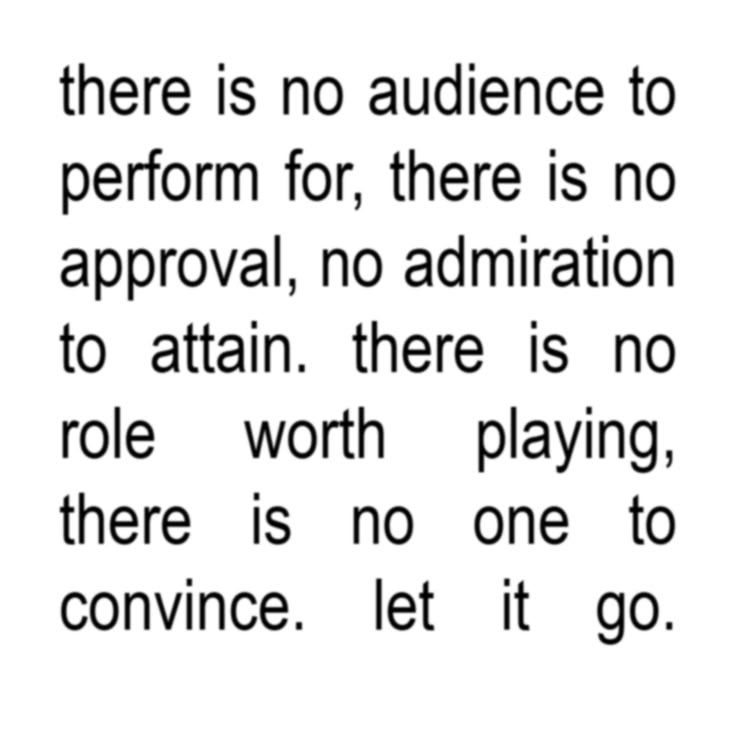
There is something strangely freeing about being alone in a room and realizing that nobody is watching.
No one is judging the way you sit. No one cares about the expression on your face. You don't have to make conversation, seem interesting, or pretend that you're having a better day than you actually are. For a little while, there is no audience.
And I wonder if that's when we become the closest to ourselves.
When other people are around, even people we trust, there is usually some awareness that we're being perceived. We think about what we're saying and how we're saying it. Sometimes it's barely noticeable. A quick decision to change a joke because it might sound weird. Choosing not to mention something because it feels too personal. Pretending to be less excited about something because we're worried about looking childish.
None of these things are necessarily dishonest.
But they do make me wonder how much of our personality is shaped by the presence of other people.
When nobody is watching, those little decisions disappear.
Maybe you sing badly while doing something completely ordinary. Maybe you talk to yourself. Maybe you spend an unreasonable amount of time thinking about something that nobody else would find interesting. Maybe you suddenly become much more emotional than you would ever allow yourself to be in front of someone else.
There is no need to perform.
And yet, I don't think the person who appears in those moments is automatically the "real" version of us.
That's the part I've been struggling with.
It's tempting to believe that the private self is authentic and the public self is simply a performance. But that doesn't feel completely right. The person who laughs with friends isn't fake just because they are quieter when alone. The person who becomes serious around family isn't pretending when they're playful with friends.
Both reactions come from somewhere inside the same person.
Maybe the presence of an audience doesn't create a different self. It simply activates different parts of us.
I think about this whenever I notice how different people can seem when they're completely comfortable. Someone who appears quiet in class might become incredibly talkative around their closest friends. Someone who seems confident might become nervous in a situation they've never experienced before. A person who always jokes around might also have a deeply serious side that almost nobody gets to see.
We often describe people using simple words: shy, confident, funny, serious, introverted, outgoing.
But maybe people are much more complicated than those labels allow.
Maybe we aren't supposed to behave the same way everywhere.
There is also something uncomfortable about being completely alone with your thoughts. Without an audience, there is nobody to distract you from yourself. You can't blame an awkward conversation for your mood or use someone else's reaction to understand what you're feeling.
Sometimes your own mind becomes the loudest thing in the room.
That's probably why people fill silence so quickly. A phone, music, videos, messages—anything can become an excuse not to sit with our thoughts for too long.
But I've started to think that those quiet moments matter.
Not because they reveal some secret "true self," but because they let us notice parts of ourselves that usually get drowned out by everything else.
Maybe being alone isn't about discovering who we really are.
Maybe it's about discovering who we are when we don't need to be anything for anyone.
And perhaps there is a small but important difference between those two ideas.
Because if there is no audience, there is no role to play.
There is only a person sitting quietly with themselves.
And maybe that's not the most authentic version of us.
Maybe it's simply the version that gets the chance to listen.