In this article
The kite runner: learning to forgive what I couldn’t forget
Growing up , books were always a part of my childhood, though they looked different from what I read today. I was the kid who waited for the next issue of Twinkle, Liliput, Nanhe Samrat and Bal hans. But somewhere along the way, I drifted away from reading . School, life , and endless distractions of growing up slowly replaced books.
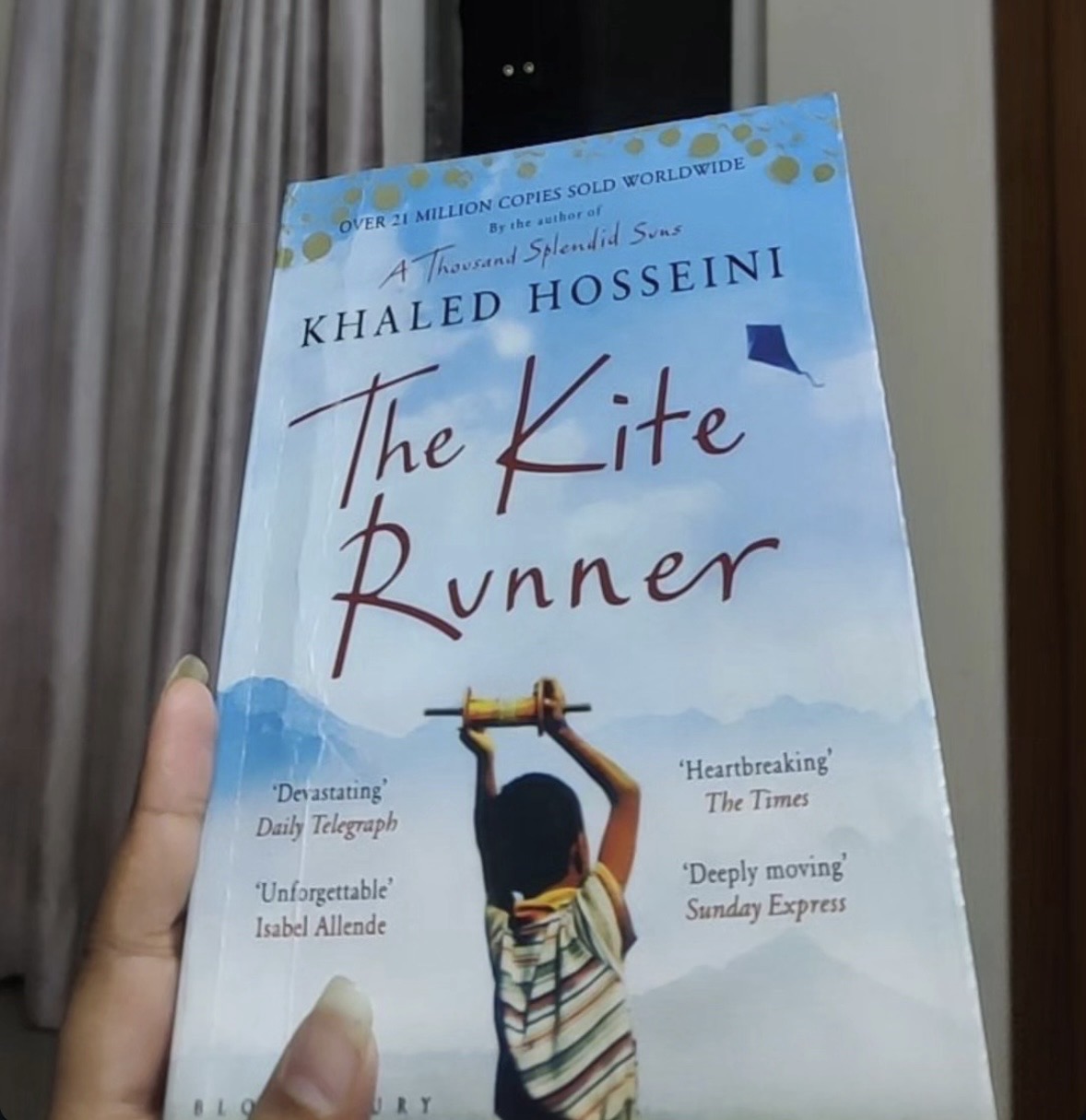
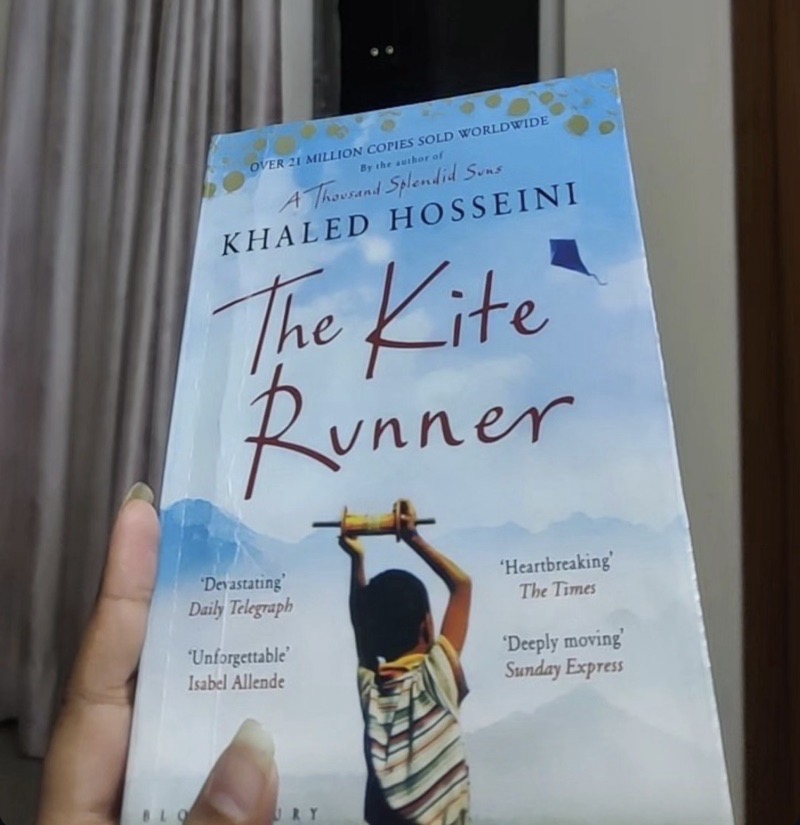
Then I came across The kite runner by Khaled hosseini. I don’t think I realised it then, but that book quietly brought me back to reading. It reminded me why stories matter, why they stay with us long after we have turned the final page.
What I felt most while reading The Kite Runner was anger, vulnerability , and heartbreak.
I was angry- so unbelievably angry- at certain characters and the choices they made. There were moments when I wanted to close the book because I simply couldn’t accept what had happened. But as the story unfolded, that anger slowly transformed into something more complicated. Not forgiveness, perhaps , understanding. Khaled hosseini has a rare gift ; he makes you judge his characters, then quietly asks you to step into their shoes.
The friendship between Amir and Hassan is what captures your heart from the very beginning. Hassan is one of the purest characters I have ever read. Despite everything life takes away from him , his love for Amir never seems to fade. The line that has stayed with me ever since I read the book is : “ My first word was Baba. His was Amir”.That single sentence tells you everything about Hassan’s heart. His loyalty was not something he chose occasionally - it was simply who he was.
And then there is Aseef, the boy who bullied Hassan. Every time he appeared , I felt a sense of dread. He represented a hatred that eventually grew into something much larger than taliban regime. Through his story, hosseini also forces readers to confront the horrifying reality of Afgahnistan. Reading about life under the taliban was heartbreaking. The fear , the violence , the constant uncertainty- it is difficult even to imagine living in such conditions. My heart especially ached for the women , whose lives were stripped of dignity , freedom , and even the smallest choices.
Amir is perhaps one of the most complex protagonist I have ever come across. I spent most of the book trying to understand him. He was only a child , frightened, desperate for his fathers approval, and paralysed by fear. I know all of that.
But I don’t think I will ever completely forgive him.
Understanding someone and forgiving them are two very different things.
What made his character remarkable, however , was that he didn’t spend the rest of his life pretending nothing had happened. He carried his guilt everywhere and eventually chose to face it.
Seeing Sohrab, Hassan’s son, trust Amir just as Hassan once did was perhaps one of the most emotional parts of the novel. That trust felt so fragile, especially after everything the child had endured.
Some books entertain you. Some educate you. And then there are books like the kite runner - that quietly change you, without you noticing.
“For you, a thousand times over”.
Twisted Love by Ana Huang

After The kite Runner, I found myself wondering what to read next. Twisted Love by Ana Huang was probably my first proper dive into contemporary romance fiction , and I genuinely didn’t know what to expect.
The funny part is , I wasn’t even a few pages in before something unusual happened.
For the first time, reading didn’t feel like reading.
It felt like a movie.
The words flowed so effortlessly that I want imagining paragraphs anymore- I was watching scenes unfold in front of my eyes. Even today, I vividly remember the opening where Ava Chen, the female protagonist, is standing alone in the rain and Alex Volkoc comes to pick her up. It’s such a simple scene, yet it has stayed with me.
I honestly never imagined that a novel could play like a film inside my head.
As I kept turning the pages, Alex slowly became my first fictional boyfriend- something I had always laughed at when people said it online. But now I understood.
Alex is the definition of a morally grey character. Cold, emotionally distant, intimidating and someone who keeps almost everyone at arm’s length. Yet somehow, none of those walls existed when it came to Ava. She was his exception.
And Ava?
She was sunshine in every possible sense.
She wasn’t loud or unrealistic. She was simply warm. She had this gentle way of bringing light into rooms, and somehow, little by little , she brought Alex into sunlight too.
Their relationship wasn’t built only on frantic moments. It was the little things.
One of my favourite scenes has to be the cookie challenge. Ava’s friends dared her to get any sort of expression out of Alex’s perpetually serious face. Such a tiny, almost insignificant moment - yet I remember laughing while reading it. I kept wondering How do authors even think of scenes like this? Those little interactions made the characters feel real instead of perfect.
Another thing I absolutely loved was the friendship between the girls.
For once, I want reading about women competing with or betraying one another. Instead, I saw genuine friendship. They teased each other, supported one another, celebrated each other’s happiness, and showed up when things went wrong. Even their conversations were entertaining enough that I never wanted to skip ahead to the romance.
Alex’s character arc surprised me the most.
Despite being a billionaire with power, influence, and endless resources, none of those things mattered once Ava walked away. After they broke up and Ava moved to another city, he didn’t simply expect her to comeback . He changed . He let go of the version of himself that had spent years hiding behind control and perfection.He tried to become someone worthy of another chance - not because Ava demanded it, but because he genuinely wanted to.
Recently , I also found that Netflix is adapting Twisted Love series. Part of me is excited because I would love to see those characters on sceeen. But another part of me is nervous. I am hoping the adaption preserves that magic instead of replacing it.
Finding My Way Back to Marvel
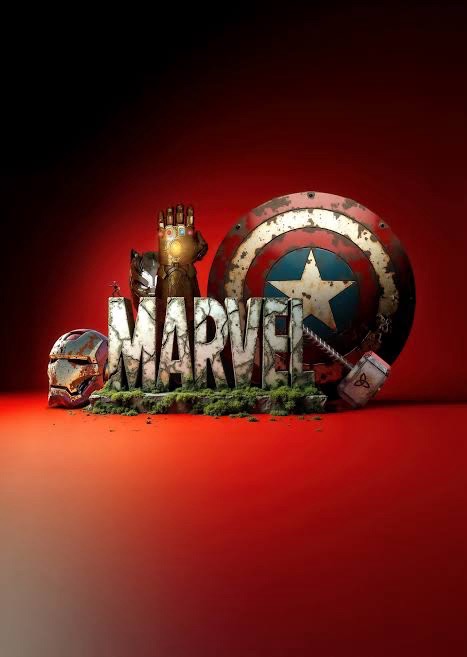
I have always had a very special kind of love for Marvel. It is one of those things that became a part of my growing - up years, even though I discovered it a little later than most people around me. I remember being in school, probably around 10th or 11th grade, and knowing Marvel only in bits and pieces. THEN, during my school examinations in February, I somehow decided that I needed to understand this entire Marvel universe. So in one week, I watched almost 14 movies , following the chronology and slowly becoming attached to these characters I had only vaguely known before . By the time I reached Infinity War and The Endgame, I was completely invested.
I remember booking tickets to watch Endgame with my family when I was in 12th , and honestly, I don’t think I was prepared for how emotional it would make me. I have always had a soft spot for Captain America, but growing up has somehow made me appreciate Iron Man in a completely different way. Maybe because I am also missing that younger version of myself who first discovered these movies with so much excitement. And everytime I watch Tony Starks death in Endgame , it still hurts a little. The original Avengers- Iron Man, Captain America, Thor, Hulk, Black Widow and Hawkeye- will always be The Avengers for me.
I haven’t really kept up with the Marvel movies after Endgame, except for Tom Holland’s Spider- Man, because somewhere I felt that the era I had grown attached to had ended. But recently, I came across Shang-Chi and the Legends of the Ten Rings, and maybe I watched it at exactly the right time. It felt like giving Marvel another chance. What surprised me was how much I enjoyed the story beyond the superhero element. Shang- Chi’s childhood particularly stayed with me. Every time I saw that little boy training so intensely , knowing the circumstances he was being raise in, there was something heartbreaking about it.
His relationship with his father is complicated in a way I appreciated. I don’t want to justify everything his father did, because there is a lot that cannot be justified, but underneath all that violence and obsession was also a man who had loved his wife deeply and was unable to accept losing her. That doesn’t excuse his actions, but it makes the character more human. I also loved the relationship between Shang Chi and Xialing. Their bond carries years of hurt, resentment, love and the feeling of two siblings who grew up differently but still somehow understand each other.
And then there is Ta lo, the magical village connected to his mothers side, which brought such a beautiful contrast to the darker parts of his story. Even Trevor Slattery’s presence made me smile because it felt like a small thread connecting this newer story to the Marvel Universe I already knew and loved.
Growing up means allowing yourself to discover new stories without expecting them to recreate the feelings of the old ones. So this is me, cautiously giving marvel another chance.
Why do we fall for fictional men?
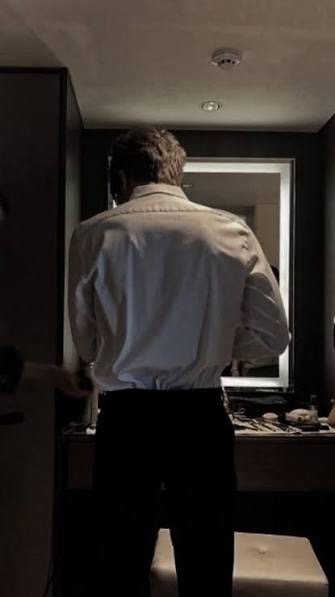
I have read more fictional men than I can probably count. At this point, I have read well over a hundred characters, and yet I keep noticing the same thing: the men written by women feel different.
There is a certain softness in them. Not a lack of masculinity, but a kind of femininity woven quietly into the way they love. They are strong , confident and sometimes ridicously masculine , but they are also vulnerable, emotionally available , caring and unafraud of loving a woman deeply.
Maybe that is why so many women fa hopelessly for fictional men.
Recently, while reading Play Along by Liz Tomforde, I found myself thinking about this again. Isaiah has been flirting with Kennedy for three years. Three years of hitting on her, teasing her and making it very clear that he wants her. Yet underneath all that confidence is someone incredibly attentive to her. He never lets anyone disrespect her. And the moment he discovers that she is not actually engaged, he tries even harder.
What gets me is not simple that he loves her. It is the way he loves her.
At the end, even when he wants her desperately, he is the first one to give her the divorce papers because he knows she has sacrificed her career for him and he refuses to be the reason she gives up the life she wants.
That is the kind of fictional man women become attached to.
There was another moment with Aaron that stayed with me. He raises his voice at Juliette for a moment , immediately realises what he has done and apologises. It is such a small thing, but it says so much. He understands that being loud does not make him more of a man. Anger does not automatically make him powerful. He is able to recognise when he has crossed a line and correct himself.
And I think women notice these things.
The men we fantasise about are not necessarily perfect. They can be jealous, possessive , arrogant, stubborn or completely down bad for the woman they love. But they are allowed to feel. They are allowed to say, “I need you”. They are allowed to chase love without feeling embarrassed by it. They do not think vulnerability makes them weak.
Ryan Shay from Liz Tonforde’s Windy City series is another example that comes to mind, he learns sign language because his wife’s parents are deaf. It is such a quiet expression of love, but that is exactly what makes it powerful. He does not simple love her; he makes an effort to understand the people and world that shaped her.
Maybe the fantasy is not really about finding a man who is impossibly perfect.
Maybe it is about imaging a world where men are allowed to be both masculine and soft. Where strength does not require emotional distance. Where loving someone deeply is not embarrassing. Where a man can protect you without controlling you , adore you without losing his dignity , and admit that he cannot imagine his life without you.
These men may exist in real life. I believe they do.
But society does not always make it easy for men to be this way.
My K-Drama Obsession
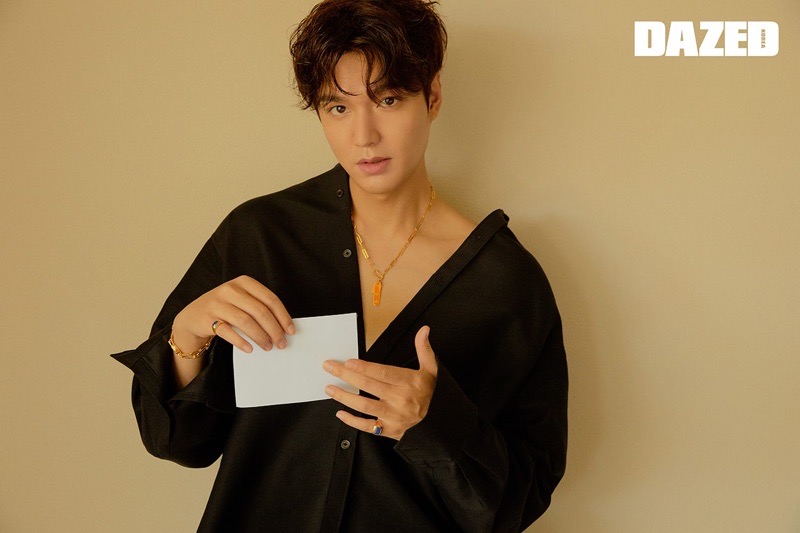
My K- drama journey started with my love for visual arts, before I even knew what Korean dramas were, I had watched My girlfriend is an alien and somehow assumed it was Korean, but then I came across True Beauty, and that was when I properly entered the k-drama universe.
I am known for binge-watching things, but with k-dramas , I realised that I actually enjoy taking in every little emotion. The episodes were almost an hour long, yet I never felt like skipping ahead. Every thing was so well made and dramatic , but never rushed . The story wasn’t only about the main couple. There were supporting characters, funny side stories , second leads and even second couples who had their own little worlds, I think that is what I love most about k-dramas , there is always something happening around the main love story.
After True Beauty , i naturally went deeper into the rabbit hole and discovered , Lee Min- ho the OG obviously. And once u started, there was obviously no stopping. Boys over flowers, The legend of the blue sea , The King : Eternal Monarch- I went through his dramas one after another. And honestly, the man does not seem to age . He still is ridiculously fine.
Then I also came across Weightlifting Fairy Kim Bok- Joo and realised that my taste is actually quite broad . I can enjoy something wholesome, something smart, something romantic, and yes something spicy too.
What fascinated me about K-dramas , though, is that they don’t always need explicit scenes to create tension. Sometimes a look , a pause, a tiny change in expression or way two characters stand next to each other is enough. The chemistry can be almost unbearable without anything actually happening.
Recently, after a long break from K- drama, I watched My Royal Nemesis, this got me back into the obsession all over again. The lead actors micro expressions were so good that I ended up staying awake until four in the morning and finishing it in a day.
And then there was also When the Phone Rings , with its very specific brooding , bad boy coded energy . Of course, after watching enough K- dramas, you start predicting everything. You know when they almost kiss is coming, when the misunderstanding will happen and exactly when the romance will finally move forward.
But honestly I don’t mind, there is something comforting about knowing the formula and still getting excited when it happens.
And I clearly have way too much to say about K-dramas to fit into one chapter, so this is definitely not the end of my exploration.
Somewhere between K-Dramas and C-Dramas

After going through my phase of Korean dramas, I somehow stumbled upon Chinese dramas. I still remember Falling into your smile , being one of the first Chinese dramas I came across. I did not explore Chinese dramas as much as I explored Korean ones, but that first experience was enough to make me curious about them.
One thing I noticed almost immediately was the difference in length. Chinese dramas seem to take their time, while Korean dramas usually have a limited number of episodes, Chinese dramas can easily stretch to thirty episodes (it can be more or less than that ). Sometimes, just looking at the episodes count is enough to make me postpone watching one.
But there is something interesting about the way Chinese dramas build relationships. I remember the chemistry between the leads in the first drama I watched- the guy involved in computer gaming and the girl around whom the story revolved. There was something genuinely cute about their equation. It was not just about the main storyline ; their little interactions were what stayed with me.
And then there are those random Chinese drama clips that keep appearing on YouTube. Honestly, some of them are dangerously convincing. You watch one clip thinking , “Okay, this looks interesting”, and suddenly you are searching for the entire drama.
What I particularly notice is the intimacy. Compared to many Korean dramas, Chinese dramas sometimes seem to take the romantic moments one step further. The chemistry can be much more intense, and there are moments explicit in comparison to Korean one. I am not saying that makes them better than Korean dramas. If anything, I still watch Korean dramas much more and maybe the length of the Chinese dramas is partly responsible for that.
I also love Chinese dramas handle supporting characters. They do not always feel like people who exist merely to push the main couple’s story forward. Many of them have their own personalities, relations, problems and entire life happening alongside the main plot. Somehow , that makes the fictional world feel much bigger.
I even removed watching My Girlfriend is an alien and enjoying the whole experience, though I can not recall every drama I have watched anymore. Maybe that is the funny thing about watching so many stories: you forget the names, the episode numbers and sometimes even the plot, but certain characters , scenes and feelings stay somewhere in your memory.
Ang Mutya ng Section E
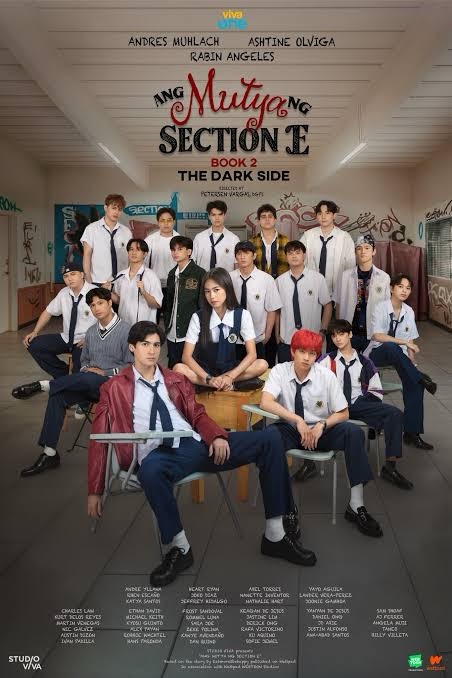
Ang Mutya ng Section E , was another of my watch from a different culture , I became obsessed with.
At first I actually thought it was a Thai series, it was only after I started looking more into it that I realised it was a Philippine series. When I finally decided to watch it, though , I was not entirely convinced. The first ten minutes did not leave the best impression on me. Something about the direction and the way the scenes were presented felt slightly underwhelming and I genuinely wondered whether I should continue watching it.
But I did and I am glad I did.
Somewhere along the way, the series completely got me hooked.
The concept itself felt little new to me - a girl finding herself in a class full of notoriously undisciplined boys. She was surrounded by them , constantly dealing with their personalities, chaos and the dynamics of being the only girl in that environment. It was something that probably made the story even more interesting for me.
And then there were Kiefer and Ashton’s.
I really enjoyed the chemistry they had and the way their relationship developed throughout the story. There was also something I liked about the sense of unity among the characters. Despite all the chaos and differences between them , there were moments where they could see how connected they had become.
Soon enough , I was completely obsessed.
Like every person who becomes invested in fictional story , I started searching about the series everywhere. That was when I found out that Ang Mutya ng Section E was originally based on a novel. I also got to know that story had further parts - Part 2 and Part 3- which made me even more curious about where the story would eventually go.
But if I had to choose one of my favourite moments from the series , it would undoubtedly be the dance. The boys performing to Daleng Dayo for Ashton’s when she was sad was one of those scenes that stayed with me. It was sweet , unexpected, and somehow perfectly captured the kind of bond the characters shared.
The second part was released this year , although I haven’t watched it yet. Maybe I will eventually, when I feel ready to return to that world again. But regardless of whether I continue with the later parts , Ang Mutya ng Section E will always remain special because it was my first Philippine drama.