Chapter 8 of 8
Paradise Lost
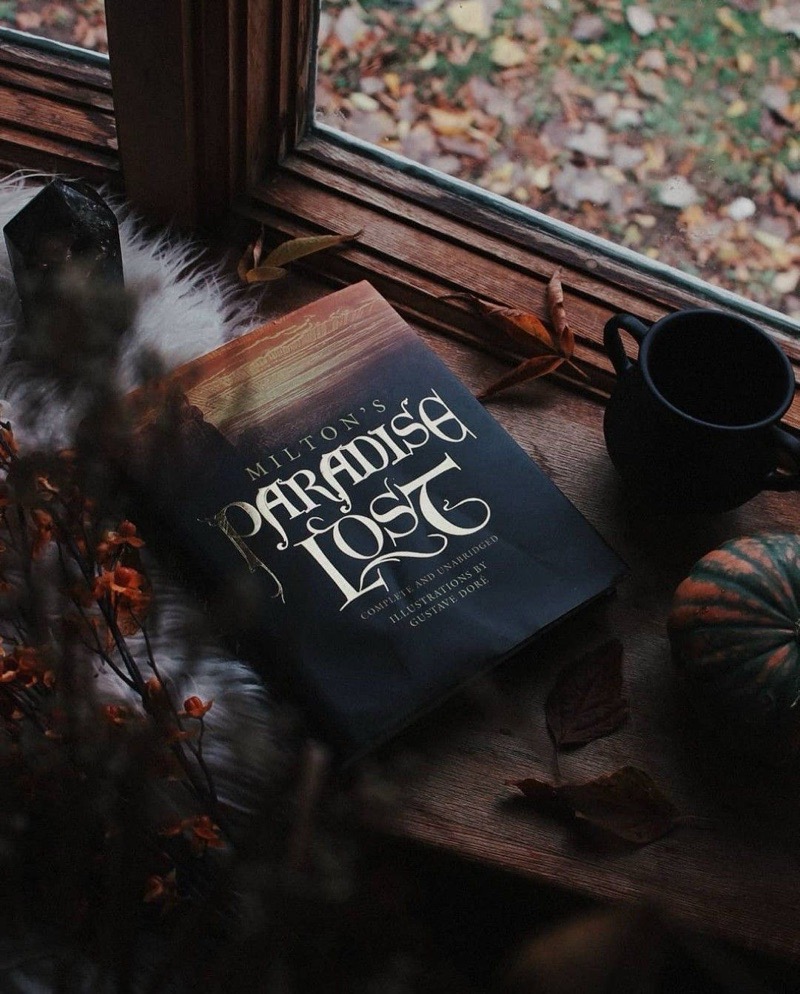
Tap the picture to see it full size
John Milton's 1667 epic masterpiece, Paradise Lost, is a monumental blank-verse poem that reimagines the biblical story of the Fall of Man. Spanning twelve books, the narrative opens in the fiery depths of Hell, where Satan and his rebellious angelic host lick their wounds following their defeat in the War in Heaven. Rather than repenting, Satan resolves to wage eternal war against God not through direct combat, but by corrupting God's newest creation: humanity.
The epic pivots between three primary realms: Hell, where Satan rallies his council of fallen angels (including Beelzebub, Moloch, and Belial); Heaven, where the Almighty and the Son observe the unfolding drama and plan humanity's ultimate redemption; and the newly formed Earth, specifically the Garden of Eden. In Eden, Adam and Eve live in unfallen innocence, embodying mutual respect, intellectual harmony, and perfect communion with God. Disguised first as a cormorant and later as a serpent, Satan infiltrates Eden. Despite warnings from the archangel Raphael, Eve is eventually tempted by Satan’s rhetoric. She eats the forbidden fruit of the Tree of Knowledge, and Adam, overwhelmed by his love for her, deliberately chooses to share in her transgression.
The poem concludes with the tragic expulsion of Adam and Eve from Paradise. However, their despair is tempered by a vision of future human history and the ultimate promise of redemption through Christ, offered by the archangel Michael as they hand-in-hand step out into a fallen, untamed world.
Milton’s achievement in Paradise Lost lies in his ability to turn cosmic theology into deep psychological and dramatic conflict. The poem's greatest literary triumph is its complex, magnetic portrayal of Satan. Milton avoids making Satan a flat caricature of evil; instead, he portrays him as a tragic, fallen figure driven by pride, eloquence, and a distorted sense of liberty: "Better to reign in Hell, than serve in Heaven." This compelling characterization has famously sparked centuries of debate regarding whether Satan serves as the unintentional hero of the epic.
From a structural standpoint, Milton masterfully harnesses blank verse, modeling his epic after classical forebears like Homer and Virgil while establishing a distinctly English theological grandeur. His expansive similes, rolling catalog of fallen angels, and elevated diction create a sensory-rich universe that elevates the Fall from a localized myth to a cosmic catastrophe.
While modern readers may occasionally find the archaic syntax, dense theological digressions, and patriarchal framing challenging, the emotional core of the poem remains profoundly moving. Paradise Lost stands enduringly as a towering exploration of free will, divine justice, and the tragic consequences of pride.
When reading about Satan's fall from grace, do you
Your vote is final.
Written by
Sumaika bint ZohairMore by Sumaika bint Zohair

Short link: hurroz.com/c/GF3AL