Paradoxes? or just thoughts?

Paradoxes? or just thoughts?

Since I was young I was always intrested in paradoxes and have watched a lot of YouTube videos or articles about some paradoxesthe things here are necessarily not paradoxes but something that makes me think.I have invented some characters for the story telling narrative

In this article

  1. 1. The Man Who Always Chose the Same Door 3 min
  2. 2. The Five People on the Track 3 min
  3. 3. The Girl Who Slowly Disappeared 3 min
  4. 4. The Society You Would Build If You Didn't Know Who You Were 3 min
Chapter 1

The Man Who Always Chose the Same Door

The Man Who Always Chose the Same Door

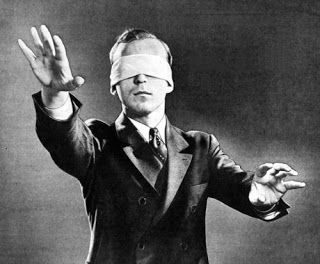
Every morning Aran stood in front of two doors. The first was painted blue. The second was painted yellow. Nobody has ever told him what was behind them. He could choose either. Atleast, that was what he believed.
Aran had grown up in a small house where his father measured life in rules. Wake up at six. Study before breakfast. Never waste money. Never argue with elders. Choose the safe road . His mother was softer, but she carried her own fears like invisible luggage.
She worried about illness, accidents, strangers , failure. Aran absorbed all of it. He learned caution before he learned courage . At school he discovered that he was good at mathematics Teachers praised him for being disciplined.
His classmates called him boring when college applications Arr bed, he chose angincerimg because everyone around him said it was sensible. He told himself.
"I chose this'
Years passed. One evening . Aran was offered a job in another city. It paid less but involved something he genuinely loved writing His friends told him not to take it.
His parents worried, "what if it doesn't work?. His father asked , Aran said no, That night he stood outside his house and stared at the two doors in his imagination.
Blue, Yellow.He wondered which one he would have chosen if he had grown up somewhere else. If his father had encountered risk instead of learning it. If his mother had taught him.that failure wasn't dangerous.
If his teachers has praised curiosity instead of obedience. It his friends had admired uncertainty instead of stability. Would he still have made the same decision?. The question followed him everywhere.
One afternoon, he visited an old professor. " Do we really choose?" Aran asked The professor smiled " you choose", he said, "Then why do I choose what I choose?."Because you
The professor didn't answer immediately "Because you are not choosing in an empty room". He pointed towards the window. "Your genes entered the room before you did. Your childhood entered with them.
Your parents. Your fears. Your memories. Your culture. Your experiences. Every person who ever loved you or hurt you is standing somewhere behind you". Aran looked at the two imaginary doors again.
Perhaps free will was not about creating a decision from nothing
Perhapsit was about what you did with everything that had already created you.That night, he made a decision. He accepted the writing job.
Not because he suddenly became completely free. His fear came with him. His upbringing came with him. His doubts came with him. But for the first time he understood something uncomfortable.
Maybe we are neither completely free nor completely controlled. Maybe we are rivers. The river does not choose where the mountain was. Built. It does not choose the rain that fills it.
It doesn't choose the rocks placed in its path. But somehow, it still moves , And perhaps that is what being human means . We inherit circumstances we never requested. We carry instincts we never designed . We become products.of places we never chose.


Chapter 2

The Five People on the Track

The Five People on the Track

At exactly 7:42 every morning. Mira watched the same train pass her apartment window. She knew it's sound. The metallic scream of the wheels. The vibration against the glass. The brief shadow crossing her bedroom wall .
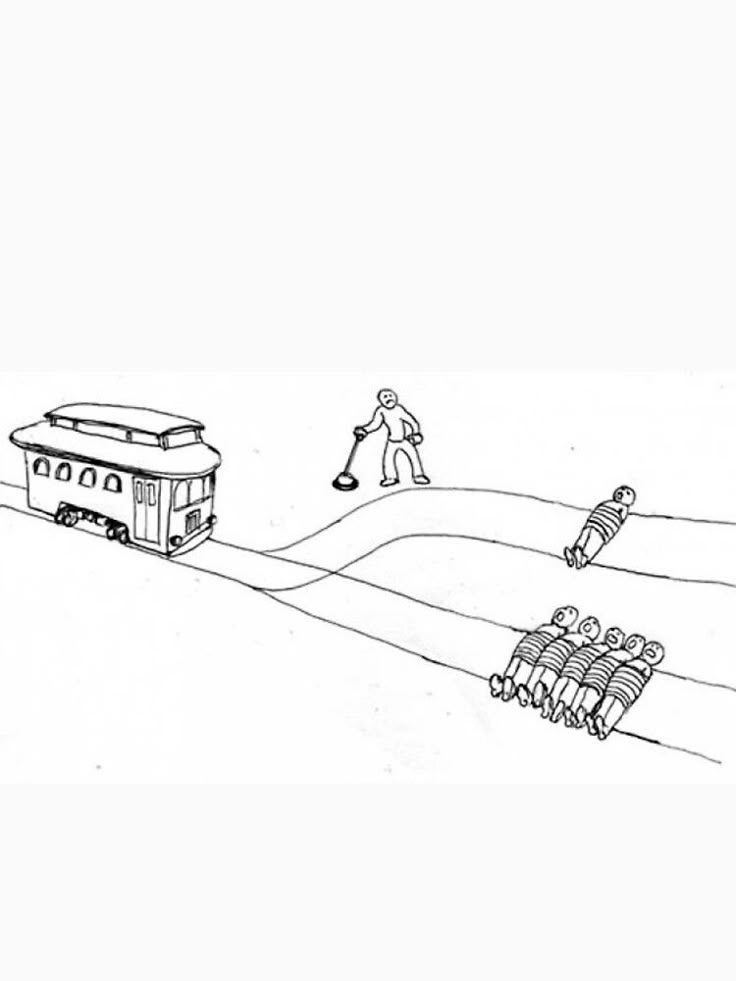
She had never thought much about itvuntil the morning the train stopped. There were six people on the tracks. Five were trapped on the main line. One was standing on a separate track.
And Mira was the only person who could move the lever. She didn't know any of them. That was important.bif one of them hadbeen her mother. She wouldn't have needed philosophy. If one had been a murderer, perhaps the decision would have felt easier.
But they were strangers. Five lives on one track. One life on another. The train was approaching. She has seconds. Pull the lever,and the train would change direction and kill one person instead of live.
Do nothing, and five people would die. The mathematics was brutally simple.
Five is greater than one.
Mira reached for the lever. There stopped, Because suddenly the numbers became people . The person on the other track had a face. Perhaps he had children.
Forhaps someone was waiting for him to come home. Perhaps he had spent his entire life trying to become a better person. Perhaps he has made mistakes.Perhaps he had done nothing wrong.
And Mira realized something horrifying. If she pulled the lever, she wouldn't simply be saving five people. She would be choosing one person to die. That distinction haunted her.
She pulled the lever. The train changed tracks. One person diet. Five survived , Everyone later called Mira a hero She didn't feel like one.
For months=she wondered whether she had done the right thing. The strange part was that she couldn't find a comfortable answer. If she had done nothing five people would have died.
If she acted, one person died because of her decision. Which is morally worse? This is the heart of the Trolley Problem. A famous thought experiment introduced by philosopher philippa Food and later developed by Judith Jarvis Thomson.
It forces us into an uncomfortable question.
Can killing one innocent person ever be morally justified if doing something saves more people?
One way of thinking says yes. If five lives can be saved at the cost of one. The outcome is better. This is broadly connected to Urilitarianism.- the idea that morality should consider consequences and seek the greatest overall good.
But another perspective says some very different. People aren't numbers. Intentionally sacrificing an innocent person may be morally wrong even when the consequences are better. And that distinction matters.
Imagine changing the question What if instead of pulling a lever. You had to push a stranger in front of the train to stop it? The mathematical result is almost identical. One person died. Five survive.
Yet suddenly most people feel sick at the idea. Why? Because our moral instincts care about how harm happens, not merely how many people survive. And perhaps that's what makes the Tralley problem so disturbing. The terrifying question isn't simply.
"Would you sacrifice one to save five?"
It is:
" Who gave you the right to decide which life becomes the sacrifice?."


Chapter 3

The Girl Who Slowly Disappeared

The Girl Who Slowly Disappeared

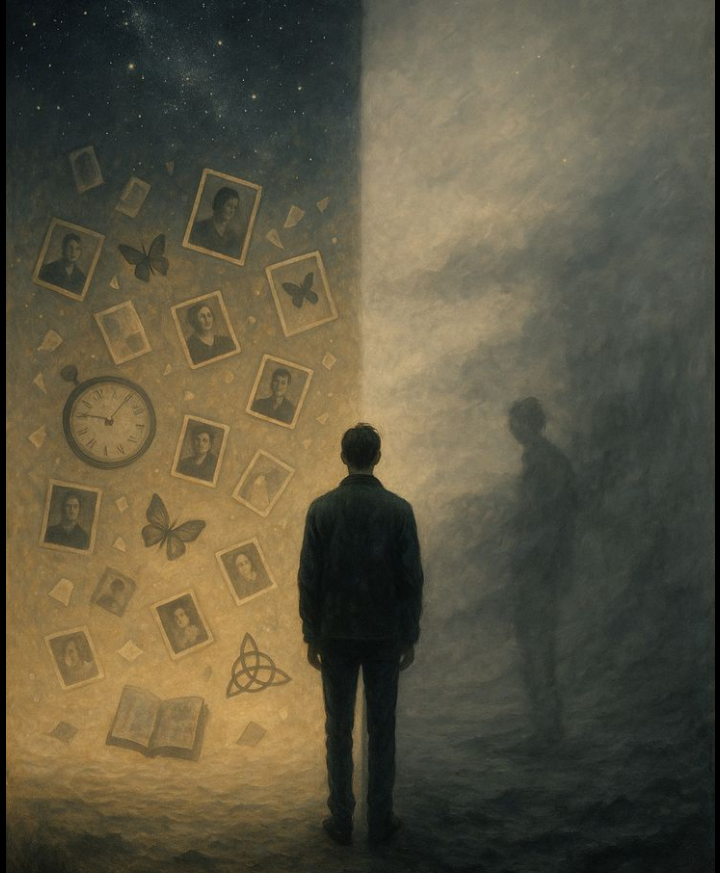
Every year on her birthday. Tara took the same photograph. Same room, window. Same expression. Same little silver necklace her grandmother had given her when she was ten. At eighteen, she places the old photograph beside the new one.
She noticed something strange. The girl in the first photograph had the same eyes. But everything else seemed different. Her hair had changed . Her face had changed . Her voice has changed.
Her opinions had changed. Even the things she feared had changed. At ten, she was terrified of sleeping alone. At fifteen, she was terrified of disappearing everyone At eighteen. She was terrified of becoming someone she didn't recognize.
Yet everyone still called her Tara One afternoon , while clearing her room , she found an old wooden music box. It has belongeds to her grandmother. The lid was scratched.
One corner was broken . The mechanism barely worked. Over the years, Tara had repaired it piece. First, the broken lid was replaced. Then the tiny metal mechanism. Then the glass.
Eventually, even the wooden base had to be replaced because it had started roting. After years of repairs, almost nothing original remained. She held the music box in her hands. And wondered..
Was it still her grandmother's music box?
If every place has been replaced, at what point did it stop being the original?. The question reminded her of herself. She wasn't the same child anymore. Her body had changed.
Her cella had changed. Her memories had changed. Some people she once loved had disappeared from her life.Some beliefs she once defended now seemed ridiculous. Some dreams she once desperately wanted no longer interested her.
And yet, when she looked in the mirror. She still said.
"That's me".
This is the philosophical puzzle known as the Ship of Theseus. The ancient thought experiment asks whether an object remains the same object when every part of it is gradually replaced. Imagine a ship belonging to Theseus.
One wooden plank becomes damaged. It is replaced. Then another. Eventually. Every original plank is gone. Is it still Theseus shop?. And then the puzzle becomes even stranger.
What if someone collects all the original planks and rebuilds another ship? Tara began woundering whether humans face the same problem. If the child you were has disappeared psychologically. Physically and emotionally. Why do you still call yourself the same person?
Perhaps identity isn't about having the same pieces. Maybe it's about continuity. The story connecting. One version of yourself to the next.The ten-year-old Tara didn't know the eighteen - year -old Tara.
But the eighteen-year-old remembered being ten. She carried thouse experiences forward. The frightened child became the anxious teenager. The anxious teenager became the uncertain adult. Nothing stayed exactly the same.
But nothing changed all at once either. Maybe that's why we feelstangely emotional when looking at old photographs.bwe see someone who looks like us but feels likeba stranger . We say:
"That was me".
Not
"That is me"
There is a tiny difference between those sentences And perhaps that difference contains the entire mystery of identity. We are constantly replacing parts of ourselves. Tara places the old photograph beside the new one. She looked at both girls. For the first time . She didn't ask which one was the real Tara.
She smiled.
They both were.


Chapter 4

The Society You Would Build If You Didn't Know Who You Were

The Society You Would Build If You Didn't Know Who You Were

Imagine being asked to design the rules of the world. You get to decide everything. How much people should earn. Howmuch tax they should pay. Who gets healthcare. How education works.
What happens when someone becomes unemployed. How society treats the poor. Howmuch power governments should have. How wealth is distributed. You can build wherever kind of society you want. There is only one catch.
Before the world begins. You won't know who you will be in it.
You won't know whether you will be born into a billionaire's family or a family struggling to afford food. You won't know whether you'll be healthy or disabled. You won't know whether you'll be highly intelligent or have learning difficulties.
You won't know whether you'll be powerful or completely powerless. You won't know your gender, religion, nationality,social class , or race. You don't even know whether you'll be born into a peaceful country or one destroyed by war. Now design the society.
Suddenly, the decision, becomes much harder. This is the Veil of Ignorance. a thought experiment purposed by philosopher John Rawls. In his theory of justice. The idea is brutally clever.
Take away your knowledge of where you will stand in society, and see what kind of rules you would consider fair.when we know we are going to be. rich , inequality doesn't seem particularly frightening. When we know we will be poor. It looks very different.
If you knew you would be healthy your entire life. Perhaps healthcare whouldn't seem like your problem. But what if you were the person . Who. needed lifelong treatment?. If you knew you would. be academically gifted, you might support an education system built around competition. But what if you were. born with a disability?.
If you knew you would. Inheritmillions, inheritance taxes might seem unfair.bBut what if you were born into poverty with if you were born into poverty with absolutely nothing?. The veil removes. The convenient assumption that you will be the idea lucky one.And that is where the idea becomes uncomfortable.
Most people want fairness. But sometimes what we call fairness simply means.
"Don't take away what benefits me".
We defend systems differently depending on which side of them we occupy. A wealthy person may call high taxation theft
A poor person may call it Redistribution. A successful student may call competitive education meritocracy.
A struggling student may call it an unequal race. A powerful person may call freedom the right to do whatever they want. A powerless person may ask who protects them when that freedom harmsbthem. The veil of ignorance forces you to remove your own identity from the equation.
You aren't allowed to say.
"What would benefit people like me?".
Because you don't know who "people like me" will be. You have to ask.
"What system would I accept if I could end up anywhere inside it?".
And that question changes everything. Perhaps you would still allow inequality. Perhaps you would still reward talent,effort and ambition. Rewls never argued that everyone must have exactly the same wealth or outcome.
The deeper question is whether the rules are defensible before you know where you will land. Because life begins with a lottery. You don't choose your parents. You Don't choose birthplace. You don't choose your. Genetics.
You don't choose your childhood. You don't choose many of the Circumstances that shapes your future. Yet we often judge people as though everyone started from the same starting line. The Vell of ignorance asks us to imagine designing that starting line without knowing which runner we will be.


More by Nila de Evelyn

3 AM thoughts
Article

3 AM thoughts

So these are the things that I think instead of sleeping at 3 AM... I overthink it and Google or browse it and then one day I thought if...

4 chapters·2 hours ago
The music, Life and Me
Article

The music, Life and Me

Sometimes music is the best way to express our feelings and they resonate deep within our souls...here I have spoken about some lines that...

4 chapters·6 days ago
Things I did without knowing
Article

Things I did without knowing

There are few things that I usually do...Maybe sometimes because of some reasons or sometimea that I do simply and I wrote about what...

4 chapters·Aug 15, 2026
Why do we?
Article

Why do we?

4 chapters·Aug 8, 2026
The Psychology of Everyday Life
Article

The Psychology of Everyday Life

The Psychology of Everyday Life explores the hidden psychological reasons behind ordinary human behaviours—why we procrastinate, overthink,...

4 chapters·Aug 5, 2026
We are not angry enough
Article

We are not angry enough

4 chapters·Aug 2, 2026
The paradox of existence
Article

The paradox of existence

What if life itself is a choice we never made? What gives existence meaning if the universe has none, and would endless life eventually...

4 chapters·Jul 31, 2026
The future we are walking into
Article

The future we are walking into

A glimpse of the improvement in the technology that we didn't think that would be possible and acknowledging how it is not in the fictional...

4 chapters·Jul 26, 2026
Corporate Survival 101
Article

Corporate Survival 101

Corporate success isn't determined by technical skills alone. The way you're perceived, the relationships you build, the influence you...

6 chapters·Jul 18, 2026