In this article
The Last lesson
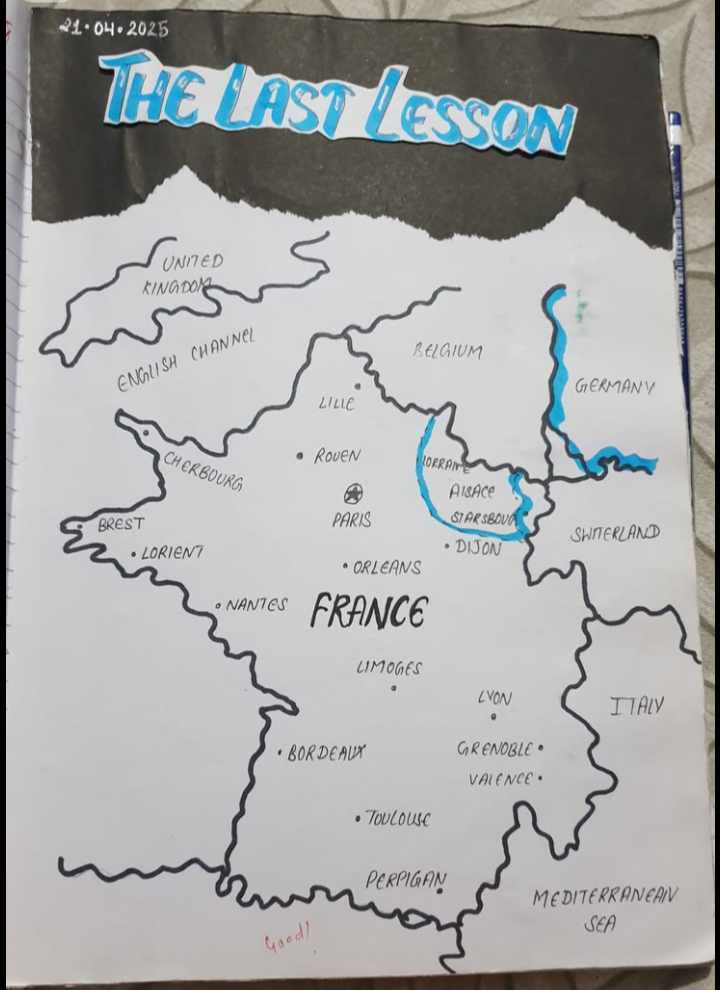
There are some school lessons we remember because they were interesting. Then there are lessons we remember because,years later. We suddenly understand them The Last Lesson by Alphonse Daudet belongs to the second kind. At first , it seems like a simple story about a boy attending school. But underneath it is a painful story about language,loss regret, identity,and realizing the value of something only when it is taken away.
The story follows Franz, a young boy who is more interested in avoiding school than attending it. He is late for class and is worried because he has not prepared his lesson an participles , on his way however, something feels unusual. The village is strangely quiet and a crowd has gathered near the bulletin board. Franz does not yet understand that his ordinary school day is about to become his last
Where Franz enters the classroom everything feels different. His teacher. M.Hamel, is dressed formally and villagers are sitting quietly at the back of the room. Then comes the devastating announcement: an order has arrived that French will not longer be taught in their schools . German will replace it. Suddenly, the boring lesson Franz had complained about becomes something he desperately wishes could continue forever.
That is what makes the story so emotional. Nothing extraordinary happens . Nobody dies in the classroom.There is no dramatic battle instead, a group of people simply sits together while somerhing deeply important is being taken from them.bM. Hamel who once seemed strict and frightening to Franz. Suddenly becomes human. Franz realized how much he has taken his teacher, his school and his language for granted.
The story also captures a painful truth about human nature,: we often recognize value only after losing access to something. When something is always available, it becomes ordinary. We complain about school because we have to attend it. We ignore our parents because they are always there . We postpone learning because there will supposedly be tomorrow. Then one day tomorrow disappears, and suddenly yesterday looks precious.
Franz's transformation is therefore more important than the political situation surrounding the story. He begins the morning wishing he could escape his lesson. By the end, he wishes the lesson would never end. The classroom has not changed much. The teacher has not suddenly become perfect. What has changed is Franz's.understanding . Loss the forced him to see the worth of something he previously considered ordinary.
The story feels relevant even now because our lives are filled with things we assume will remain. We assume there will always be another conversation, another chance to learn, another evening with friends, another opportunity to say thank you. We keep postponing appreciation because nothing appears urgent. We rarely notice the final time something happens while it is happening.
Perhaps that is the quiet cruelty of The Last Lesson.the characters do not know how valuable their final ordinary moments are until they become final. We experience the same thing constantly. The last conversation with someone may feel completely normal. The last day of school may feel boring. The last time we aitnat home without Responsibilities may pass unnoticed. We only understand their importance after they become memories.
That is why this story stays with us long after the examination is over. It is not really asking us to memorize Franz, M.Hamel or the historical circumstances. It is asking us to look at our own lives differently. The people opportunities, languages, places, and ordinary moments surrounding us may seem permanent, but nothing is guaranteed. Sometimes the greatest lesson is simply learning to appreciate something before life turns it into something we can only remember.
The necklace
The Necklace by guy de Maupassant is one of those stories that seems simple whenvwe first study it. But becomes much more meaningful later. It follows Mathilde Loisel, a woman dissatisfied with her ordinary life. Who desperately wants wealth, luxury, and social status. Her dissatisfaction eventually costs her almost everything.
Mathilde is not poor enough to meiserable, yet she cannot apprectate what she has. She dreams constantly about expensive dresses, beautiful houses, elegant dinners and wealthy friends . Her problem is not ambitions itself. Wanting a better life is perfectly reasonable. The problem begins when wanting more turns into despising what you already have
Then comes the invitation to an elegant party. Her husband instead of thinking only about himself, happily uses his savings to buy her a dress. When she complains that she has no jewellery, he even suggests asking her wealthy friend. Madama Forestier for something Honestly the man deserves a separate chapter titled Husband of the Year.
Mathilde borrows a beautiful diamond Necklace and finally feels like the woman she always imagined herself to be. For one evening. She receives attention, admiration, and everything she believes will make her happy. But after returning home she discovers that the necklace has disappeared. Suddenly her glamorous evening becomes a financial nightmare.
Instead of immediately telling Madama Forestier the truth. Mathilde and her husband decide to replace the necklace. They borrow enormous amounts of money and spend ten years working desperately to repay their debts. They lose their comfortable life, their youth and their freedom. One decision made from fear and shame.transforms their enrire future.
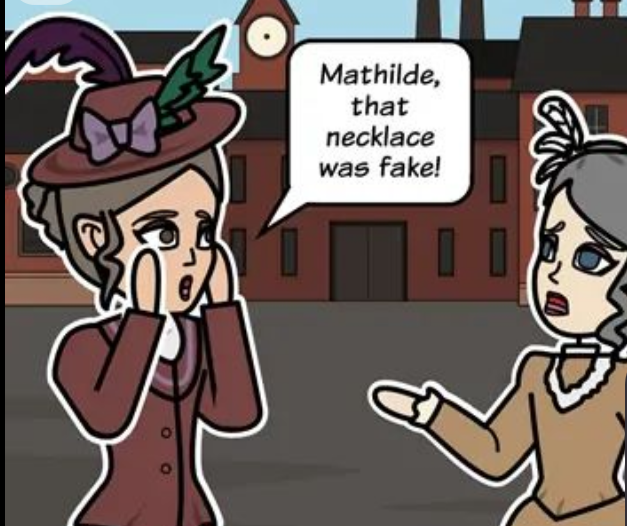
The cruelest part is the revelation at the end. After ten years of suffering. Mathilde discoveres that the orginal necklace was fake.bIt was worth far less than the replacement they bought. Imagine destroying ten years of your life because you were too frightened to say, " I lost your Necklace. I am sorry". Brutal
That is why the story feels like a warming about both envy and dishonesty. Mathilde constantly compares herself with people who have more and comparison makes her blind to what she already possesses. Wanting to improve your life is healthy but believeing someone else's lifestyle determines yourbworth can turn ambition into misery.
There is also something surprisingly beautiful about her husband. He does not abandon her when everything collapses. He works, sacrifices, borrows money and spends ren exhausting years helping repay the debt. He may not be rich, glamorous, or powerful but when life becomes ugly,he stays
In today's language that man is an enormous green flag.
Perhaps the real lesson is not simply " be satisfied with what you have". Webshould absolutely dream bigger work harder, and aim higher. But ambition should build your life not male you hate your present. And when something goes wrong, honesty can hurt for five minutes while hiding the truth can cost ten years. Sometimes telling the truth is the cheapest solurion.
My mother at sixty six
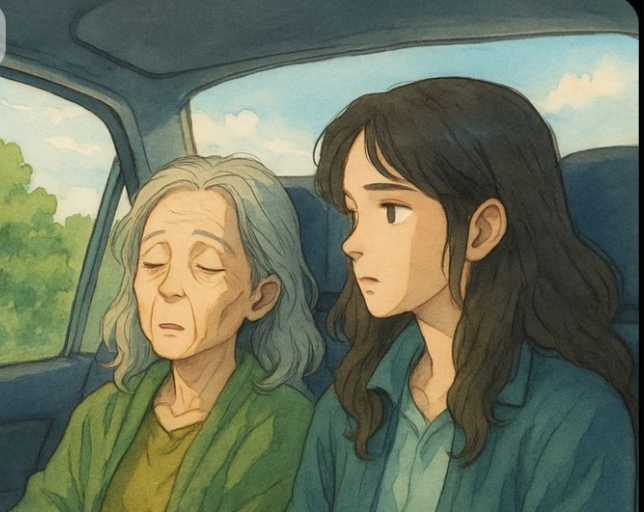
Some poems are beautiful. Some are memorable. And then there are poems that feel like someone reached into your chest and squeezed your chest and squeezed your heart. My mother of sixty Six by Kamala Das is one of those poems.
When we first read it,it may feel like another chapter to study. Later it becomes painfully personal.
The poem begins with the poet travelling with her ageing mother. She looks at her mother's face and suddenly notices how old and tired she has become. Her mother is asleep beside her. Looking pale and lifeless. That ordinary moments becames terrifying because the poet is confronted with something children often refuse to imagine their parents will eventually leave them.
When makes the poem hurt is how ordinary the situation is.There is no dramatic tragedy happening. A daughter is simply sitting beside her mother during a journey. Yet while looking at her. She realizes that time has been moving silently .The woman who once carried her protected her and probably seemed almost immortal is now becoming old.
That realization is painfully relatable even today. We grow up watching our parents become older without really noticing it,bwe are busy with school, college,work,friendships, and our own problems. Then suddenly we notice a few greybhairs slower footsteps, tired eyes,or the way they struggle with something that once seemed effortless. For a second, everything feels frighteningly real.
The poem's most painful emotion is not simply sadness. It doesn't s helplessness. The poet knows that ageing cannot be stopped. Love cannot bargain with time . Money cannot permanently protect. Someone from death . No amount of success can give us the one thing we secretly wantbenough time with the people we cannot imagine living without.
The ending makes that fear even more powerful. The poet says goodbye to her mother while hiding her sadness behind a smile, just as she did when she was young . She knows the separation is temporary. But another thought is waiting underneath it - the possibility that one day the good buy will not be temporary. That possibility is what makes the poem feel like a punch.
I think that is why reading this poem now feels different from reading it as a student. Earlier the poem was about an old mother and a frightened daughter. Now it can suddenly feel like a mirror. We start imagining our own parents sitting beside us, ageing quietly while we are busy becoming adults. And the realization can make your stomach drop.
The terrifying part is that we can never completely prepare for that day. People often say that death is natural and inevitable, but knowing something intellectually does not makes experiencing that our parents will not be with us forever, yet some childish part of us continues believing that somehow they will always be there.
Perhaps the poem's greater lession is not simply about death. It is about noticing people whilebwe still have them . Call your mother sit beside your father. Listen to the story you have already heard five times. Notice their hands their voice their habits not because these things can prevent the future, but because one day they may be exactly what you desperately wish you could experience again.
My mother at sixty Six stay with me because it captures a fear I don't think I will ever completely overcome . I can accept that ageing is part of life, but I don't think I will ever be ready for the day whenbmy mother becomes only a memory. Maybe nobody is. Maybe that is why the poem hurts because somewhere inside us we already know the goodbye is coming and we wish time would slow down
The road not taken
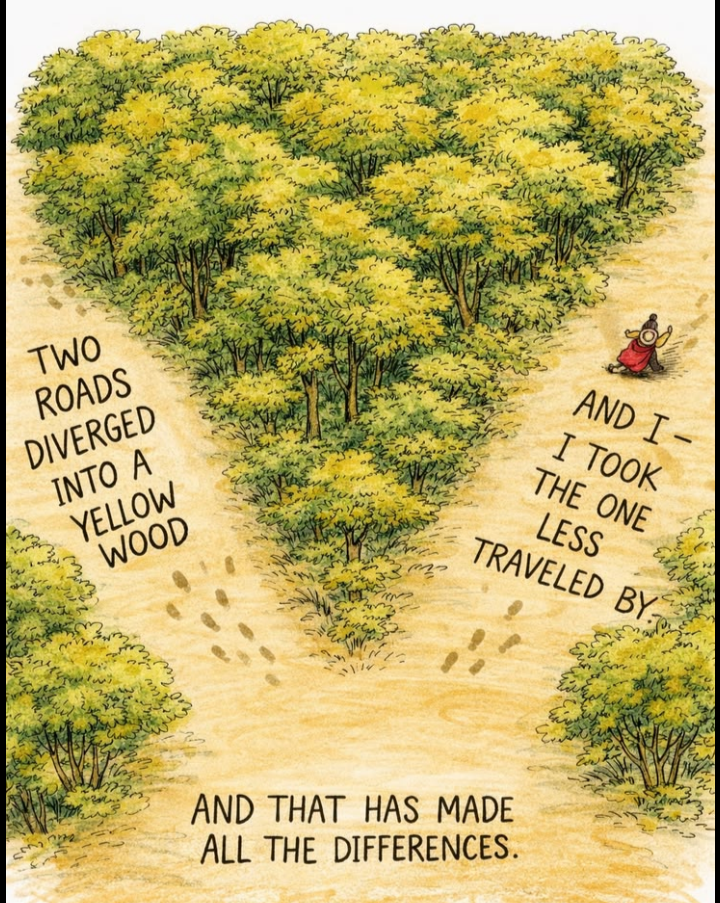
And then there is The Road Not Taken.How could I possibly write about nostalgic CBSE lessons and forget this one?. The moment I see two roads dividing somewhere, ibcan almost hearvmy teacher asking me to read Robert Frost's poem aloud at the front of the class. Apparently, choosing roads wasn't enough; I had to choose punishment too.
I still remember standing there pretending that being called to the front was completelybnormal. My classmates went wat watching, myteacher was waiting and I was holding the textbook likebit contained instructions for surviving public humiliation . Thankfully I actually loved reading. So while it was definitely punishment. I read the poem confidently, dramatically and probably with farvmore enthusiasm than the situation deserved.
The poem describes a traveller who overcomes across two roads diverging in a yellow wood. He wishes he could travel both but he has to choose one. He carefully examines them before selecting one. Knowing that choosing one means Leaving the other behind. It sounds simple. but somehow Robert Frost turned choosing a road into an entire existential crisis.
As a child I mostly understood it as a lesson about making good choices. Choose your own path. Because different. Don't blindly follow everyone else. It was the kind of interpretation that fit preferably with three points, one quotation, and a conclusion thatvaounded suspiciously wiser than anything I actually understood.
But reading it now feels different. The roads are no longer just roads. They are every decision we make without knowing what waits afterwards. One college instead of another. One friendship instead of another. One opportunity we accepted while quietly wondering what wouldbhave happened if we had chosen differently. Every choice a creates a future while quietly closing another possibility.
And that is the uncomfortable part . We rarely know which road is better when we are standing at the beginning. We make decisions with incomplete information and then live with them. Sometimes we look back and wonder about the road we didn't take. Imagining that it would have led somewhere better of course. We never know. Our imagination gets to design it's perfect version.
That is probably why the poem stays relevant. We are constantly surrounded by choices, and everyone seems to have an opinion about which direction we should take. Friends, parents, teachers, society, social media - everyone has a map. But nobody can actually walk the road for us. Eventually we have to choose knowing there is no convenient preview button.
And honestly, I think my teacher accidentally gave me a better lesson than intended. That punishment I disliked became one of those memories that survived long aftervthe actual classroom disappeared. Now whenever I see two roads dividing, I don't just think about Robert Frost . I remember standing in front of my classmates, reading confidently while secretly thinking
Fine, I'll read your stupid poem.
Years later, I understand why the poem mattered. It wasn't telling us.
That one road is always better because it is less travelled. It was about uncertainty choice and the stories we create afterwards to explain our decisions. We choose first and then we spend years giving meaning to the road we chose.
Maybe that is why The Road Not Taken belongs in my collection of stories and poems that stayed. I don't remember every lesson I studied for an exam.bi don't remember every answer I memorized. But I remember that classroom, my teacher, that textbook and the ridiculous confidence with which I read a poem I was supposed to read as punishment Some punishments really do take the longer time to understand.
More by Nila de Evelyn